Showing posts with label stroke. Show all posts

Saturday, April 26, 2014

0 The content of caffeine in drugs increase the risk of stroke

The content of caffeine in drugs increase the risk of stroke - Quite often we find that the caffeine in the composition of common drugs are sold freely on the market or pharmacy. From now on, you should be wary if the caffeine found in drugs consumed. Because a study in Korea found evidence that the caffeine content in the medicine can increase the risk of stroke by two or three times.

The results of this study contradict previous research which states that coffee and tea can strengthen protective effect on the heart. However, the authors also explain that the two studies appear contradictory this may have common ground. People who consume less coffee or tea are known to be affected by drugs that contain caffeine.

Whats more, researchers found that caffeine could be contained in a variety of drugs, ranging from ordinary painkillers, or cold medicines are sold in general and widely consumed by the public, as reported by the NY Daily News.

"Caffeine has properties that cause the blood vessels to tighten and increase the pressure on the blood flow," said lead researcher Nam-Kyong Choi from Seoul national University College of Medicine.

These results were found after researchers observed 940 adult patients who had a stroke. They compared the drugs consumed, and found that people in medicine containing caffeine are more likely two to three times the stroke.

However, when compared with the coffee drinking habits, researchers found that participants who had a habit of drinking coffee every day and taking medications that contain caffeine does not seem to have a pretty big risk.

The discovery was actually quite strange because coffee and tea contain more caffeine than are contained in medicines. Even so Choi assume that coffee or tea may contain substances that are useful and reduce the effects of caffeine in it. Although the finding that caffeine can increase the risk of stroke, but Choi still do not know the mechanism.

Friday, April 4, 2014

0 B Vitamin Folate Lowers Stroke Risk by One Quarter

Stroke is the fourth leading cause of death in America each year with 700,000 people suffering needlessly from this debilitating illness. Stroke attacks with virtually no warning and can leave its victims unable to walk or perform the simplest task. Stroke risk increases with age, number of years consuming a nutrient-deficient diet and inactive lifestyle in a similar manner to heart disease.

Research published in the Lancet shows that members of the B-vitamin family, specifically folate (vitamin B9) from leafy green vegetables provide essential support to protect the vascular system by lowering platelet aggregation and levels of atherogenic homocysteine.

High Folate from Raw Vegetables Lower Stroke Risk by 25%
Researchers from the Northwestern School of Medicine performed a meta-analysis of eight significant studies and found that supplementation with folic acid reduced dangerous levels of homocysteine by 20% and lowered first time risk of a stroke by 25%. For individuals at risk for a second stroke, the incidence was lowered by 18%.

The human body requires folate to synthesize, repair and methylate DNA for cellular division and replication. Folate also helps to lower concentrations of homocysteine in the blood that are known to aggravate the inner endothelial lining of the vessels and arteries that feed the heart and brain. As a result of their analysis, the study authors concluded “Our findings indicate that folic acid supplementation can effectively reduce the risk of stroke in primary prevention.”

Folic Acid Supplementation Lowers Heart Attack Risk by 15%
In a similar meta-study published in the journal PLoS ONE, researchers found that supplementation with folic acid lowered the risk of a first heart attack by 15%. Elevated levels of homocysteine cause blood platelets to stick together and clump, increasing the risk of a thrombus or clot circulating to the coronary arteries and resulting in a heart attack. The entire family of B-vitamins is known to be critical to the prevention of heart disease and stroke by reducing arterial plaque accumulation and acting as a cofactor in cellular metabolism.

Deficiency in B vitamins and specifically folate has been linked with brain aging and cognitive decline. Folate provides a basic foundation for nerve health and brain aging and when reserves become lowered, toxic free radical damage is allowed to wreak havoc in the brain. In one study, individuals with the lowest levels of circulating folate experienced increased incidence of cognitive decline, poor mental function and risk of depression.

Top natural food sources of folate include leafy greens and vegetables including spinach, asparagus, parsley, broccoli and beets. Beans such as pinto, navy, black and kidney varieties provide a healthy dose of the nutrient as well. Depending on diet it may be necessary to supplement with folic acid. Nutrition experts recommend between 400 and 800 mcg daily taken with food to minimize your risk of stroke, heart disease and cognitive decline.

Tuesday, March 25, 2014

0 Southern diet could raise your risk of stroke


Eating Southern-style foods may be linked to a higher risk of stroke, according to research presented at the American Stroke Associations International Stroke Conference 2013.

In the first large-scale study on the relationship between Southern foods and stroke, researchers characterized a Southern diet by a high intake of foods such as fried chicken, fried fish, fried potatoes, bacon, ham, liver and gizzards, and sugary drinks such as sweet tea. In addition to being high in fat, fried foods tend to be heavily salted.

"Weve got three major factors working together in the Southern-style diet to raise risks of cardiovascular disease: fatty foods are high in cholesterol, sugary drinks are linked to diabetes and salty foods lead to high blood pressure," said Suzanne Judd, Ph.D., M.P.H., lead researcher and a nutritional epidemiologist at the University of Alabama Birminghams biostatistics department.

Previous research has shown that Southerners are about 20 percent more likely to have a stroke than the rest of Americans.

Comparing the dietary habits of more than 20,000 black and white adults, researchers found:

- Stroke frequency was directly proportional to how much Southern food participants ate.
- People who ate Southern foods about six times a week had a 41 percent higher stroke risk compared to those who ate it about once a month.
- Eating a Southern diet accounted for 63 percent of the higher risk of stroke among African-Americans above that of their white counterparts.
- Those whose diets were highest in fruits, vegetables, legumes and whole grains (eaten about five times a week) had a 29 percent lower stroke risk than those whose diets were the lowest in these foods (eaten about three times a week).

The study raises red flags for African-Americans who are five times more likely to eat Southern foods than whites, Judd said. And first-time stroke risk among blacks is almost double that of whites, according to American Stroke Association statistics.

Participants from 48 states answered telephone questionnaires about what foods they eat as part of the ongoing Reasons for Geographic and Racial Differences in Stroke (REGARDS) Study (begun in 2003). Participants were evenly divided between men and women, and the minimum age was 45.

Each person underwent an in-person medical assessment including height, weight and blood pressure measurements; an electrocardiogram; and a blood test. Every six months after, participants answered follow-up telephone questions about their stroke incidence, sleep habits and overall health.

Researchers designed a mathematical model to group foods commonly eaten together into 56 different categories. Each persons eating habits were scored based on the categories. The scores were further analyzed in relation to how often they had a stroke.

About two-thirds of the participants who ate the most Southern-style foods lived in the southeastern United States. But, no matter where they live, people eating a lot of Southern foods should be more aware of their risks of stroke, Judd said.

Healthcare providers should educate patients about nutrition earlier, and ask patients about what theyre eating, how much and how often, she said.

Wednesday, February 5, 2014

0 Alpha Lipoic Acid Lowers Blood Pressure and Reduces Stroke Risk

(Article first published as Super Nutrient Lowers Blood Pressure and Reduces Stroke Risk on Technorati.)
Slowly rising blood pressure as we age places millions of Americans at increased risk for heart attack and stroke. Medical practitioners and Big Pharma think the answer is prescribe a host of different pharmaceuticals until a magical number is achieved artificially. Research has rapidly emerged to demonstrate that reaching a normal blood pressure using drugs is not the same as lowering blood pressure naturally.

In fact, using drugs to lower blood pressure can contribute to a host of damaging side effects including death. Fortunately you can take advantage of nature`s treasure of antioxidants from fruits and vegetables and supplement with lipoic acid to dramatically lower your risk of heart attack and stroke.

Protein Damage Contributes to High Blood Pressure
For the first time, researchers have discovered the actual underlying cause of high blood pressure and the best way to alleviate the problem at its source. The result of a study published in the journal Nature demonstrated that a key regulatory protein that controls blood pressure is damaged by the normal wear and tear caused by free radicals. The protein angiotensinogen becomes damaged through free radical assault and leads to hypertension.

Researchers found that a low antioxidant status was indicative of increased blood pressure. Insufficient circulating antioxidants allow damage to angiotensinogen protein molecules and loss of blood pressure regulation. The study determined that simply increasing antioxidant status was not enough to fully lower blood pressure readings and found that other mitigating factors such as stress, being overweight, and insulin resistance generated high levels of free radical damage. When these factors were addressed and controlled, increased intake of antioxidants from natural food sources and supplementation effectively lowered blood pressure levels.

Antioxidants Lower Risk of Stroke by 60%
Stroke is a leading cause of disability and mortality in western society, largely due to damage to the delicate vascular network and the movement of blood clots through the body. Free radicals cause the endothelial lining of delicate blood vessels to become unstable and inflamed, greatly increasing the risk of an ischemic stroke. A study released in the Journal of Nutrition found that individuals with the highest antioxidant status were 60% less likely to suffer from a stroke. Vitamin C alone was found to lower the risk by 40%.

Lipoic Acid Rejuvenates Antioxidant Status During Aging
The human body functions at an advanced metabolic rate and our cellular mitochondria generate large amounts of free radicals that wreak damage in the process. Mitochondria are the energy producing structures in each cell and are particularly vulnerable to free radical damage. Details of a study published in the Annals of the New York Academy of Science demonstrated how lipoic acid is able to prevent damage to the mitochondria by providing a powerful antioxidant shield to the cellular structure. They found the `R-lipoic acid` form to be most effective.

Energy production within our body generates large numbers of free radicals that are known to be the cause of aging and chronic conditions including heart disease, high blood pressure and stroke. In addition to controlling external factors such as stress, weight and insulin resistance, increasing antioxidant status from raw foods and supplements is shown to slow the aging process and dramatically lower the risk of disease.

Tuesday, November 19, 2013

0 8 Strategies to Prevent Stroke

8 Strategies to Prevent Stroke | Stroke or partial loss of all neurological function (nerve), which occurs suddenly has become one of serious diseases in Indonesia, because of a growing number of cases.

In developed countries like United States, stroke ranks third as a cause of death. While in Indonesia, stroke is the leading cause of death and top cause of disability.

"It takes a strategy for dealing with stroke. Data in Indonesia showed that 8.3 per 10,000 people suffer a stroke," said dr. Dani Ekawati Yulianti, SpS, neurologist MRCCC Siloam Hospital Semanggi, while seminar Healty Healthty Brain for Life, in Jakarta, Saturday (14/01/2012).

In fact, as much as 23 percent of patients who were hospitalized due to stroke resulted in death.

There are many risk factors that trigger onset of stroke such as hypertension, diabetes mellitus, smoking, hypercholesterolemia, metabolic syndrome, cardiovascular disease, and excessive alcohol consumption. However, these risk factors can actually be altered by treatment of lifestyle.

8 Strategies to Prevent Stroke

1. Healthy and Balanced Diet

2. Regular physical activity

3. Weight Control

4. stop Smoking

5. Limit Alcohol Consumption

6. control of Hypertension

Lowering high blood pressure to target less than 140/90 mmHg (without other comorbidities).

7. Blood Sugar Control

For diabetics, the target of more aggressive blood pressure reduction of less than 130/80. Blood sugar control target of HbA1c <6.5 percent.  

8. Hypercholesterolemia

For people with high cholesterol (hypercholesterolemia), the provision of statins and lifestyle modifications with target LDL cholesterol levels less than 100 mg / dl.

Saturday, September 28, 2013

0 Types of Stroke symptom

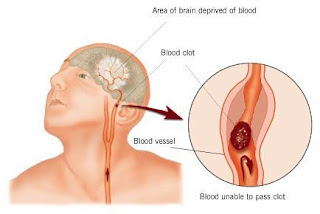
Stroke and its types | Stroke is a loss of brain function caused by the interruption of blood flow to the brain area. If blood flow is stopped for longer than a few seconds, the brain tissue cells are not getting the nutrients and oxygen can die and cause permanent damage to brain function.

The most common signs of a stroke is sudden weakness of the face, arm or leg, most often on one side of the body. Other warning signs may include:

Sudden numbness of the face, arm, or leg, especially on one side of the body
Confusion, sudden trouble speaking or understanding speech
Sudden trouble seeing in one or both eyes
Sudden trouble walking, dizziness, loss of balance or coordination
Sudden severe headache without known cause.
Types of Stroke | symptom

Signs of a stroke depend on the affected side of the brain, parts of the brain affected, and the extent of brain injury. Therefore, each person may have warning signs of stroke are different. Stroke can cause headaches, or perhaps not at all painful.

There are two main types of stroke:

1. Ischemic stroke

Ischemic stroke occurs when a blood vessel that supplies blood to the brain is blocked. This types stroke is the most common (about 90% of strokes are ischemic).

Conditions underlying ischemic stroke is the accumulation of fat that lines the walls of the blood vessels (called atherosclerosis). Cholesterol, homocysteine ​​and other substances can be attached to the walls of arteries, forming a sticky substance called plaque. Over time, plaque builds up. It is often difficult to keep the blood flowing properly and cause a blood clot (thrombus).

Ischemic stroke is distinguished by causing blockage of arteries:

  • Thrombotic stroke. Blockages caused by thrombus that develops in the arteries of the brain that is already very narrow.
  • Embolic Stroke. Blockages caused by thrombus, air bubble or fat fractions are formed in other body parts, such as the heart and the aorta in the chest and neck, which is carried by the flow of blood to the brain.

2. Hemorrhagic stroke.

Hemorrhagic stroke caused by a blood vessel that leaks or ruptures within or around the brain that block the blood supply to the brain tissue in question. In addition, it flooded and compresses the surrounding brain tissue that interfere with or disable the function.

Two types of hemorrhagic stroke:

  • Intracerebral hemorrhage. Intracerebral hemorrhage is bleeding in the brain caused by trauma (brain injury) or abnormalities of the blood vessels (aneurysm or angioma). If it is not caused by one of these conditions, most often due to chronic high blood pressure. Intracerebral hemorrhage accounts for approximately 10% of all strokes, but it has the highest percentage of deaths due to stroke.
  • Subarachnoid hemorrhage. Subarachnoid hemorrhage is bleeding in the subarachnoid space, the space between the inner layer (Pia mater) and middle layer (arachnoid mater) of the tissue lining of the brain (meninges). The most common cause is rupture of the bulge (aneurysm) in the arteries. Subarachnoid hemorrhage is a serious medical emergency that can cause permanent disability or death. Stroke is also the only type of stroke is more common in women than in men.

Sunday, September 15, 2013

0 Why Diabetes Puts You At Higher Risk Of Stroke

Diabetes happens when your body cant process the levels of glucose your blood needs. Your body turns sugars and carbohydrates into glucose for energy. People with Type I diabetes cant process the glucose at all because their body doesnt produce enough of the insulin to deal with it. Type II diabetes happens when your body still produces insulin, but it cant process all the glucose.

When your blood sugar counts become too high because your body is incapable of handling it, and continue to stay high then you likely have Type II Diabetes. It can only be diagnosed by a doctor, and there are certain criteria that must be met. That includes more than one fasting blood test with high glucose readings, as well as high A1C numbers. Type I diabetes is generally diagnosed in childhood. Type II diabetes is generally diagnosed later in life, in middle age. However, these days we are noticing that it is being diagnosed earlier and earlier.

Part of any regime for diabetes is to regularly check your blood for its sugar level. Thats because having diabetes puts you at higher risk for other conditions, so monitoring your blood sugar and keeping it in check are crucial to the well being of a diabetic. People who have diabetes are at higher risk of heart disease, high cholesterol and stroke. Stroke happens when the blood supply to part of the brain is cut off. It can cause permanent brain damage. Obesity is one of the biggest risk factors for diabetics, and it can also be one of the biggest symptoms of diabetes. That obesity helps to increase the risk factors for diabetics. Controlling blood glucose levels and obesity go a long way to decreasing the risk of complications.

While Type I diabetics will need Insulin, in some form, for their entire lives, Type II diabetics have other choices. Some will need to have some medications, but there are many other who completely control their illness by diet and exercise. A diagnosis of diabetes does not have to be a death sentence. It is a manageable, if not even reversible disease, with the proper care, guidance and medical supervision. If you think you or a loved one may have diabetes, either type I or type II diabetes, it is important to see a doctor for the proper testing as soon as possible, if for no other reason, but just to know exactly what you are dealing with.

Authors Resource Box

Author : Jonathan
www.ihealthtampa.com

Article Source: Why Diabetes Puts You At Higher Risk Of Stroke
 

2012 i wanna free acne Health basic