Showing posts with label more. Show all posts

Saturday, April 26, 2014

0 The present generation Eat less the more body fat

The present generation: Eat less, the more body fat - Recent research unload quite astonishing phenomenon. According to investigators, the present generation mostly ate 600 fewer calories than 30 years ago. But the 15 kg weight tend to be fat.

Researchers also suspect snacks, sweets, and fast food be the cause of the phenomenon. Due to unhealthy eating patterns, the number of cases of obesity also increased dramatically.

In addition to food, an active lifestyle is not moving as well be one of the triggers of the present generation of obesity, according to researchers from the Institute of Fiscal Studies.

While at home, todays generation is trying to eat healthy foods. But when it is outside the home, food and beverage consumption of unhealthy very difficult to control.

"In addition to fat, sugar is the culprit of weight gain. Coupled with the lack of activity," says Professor Rachel Griffiths, as quoted by the Daily Mail.

Although the study focused on UK residents only, but the discovery that at least can be used as a guide for anyone. In essence, diet and lifestyle is the main cause that lead to obesity and other dangerous diseases.

The results are then reported in the journal The Grocer.

Monday, April 21, 2014

0 More On The Death Of Disease Management

At the email prodding of several colleagues, the Disease Management Care Blog next turns its attention to a blog posting by Archell Georgiou MD provocatively titled "The Death Of Disease Management (Finally!).  The Archelle on Health Blog contrasts the industrys early promises of evidence-based medicine plus patient self-care with the bitter fruits of non-existent savings, the disappointing Medicare Health Support (MHS) demo and a just-published anti-disease management New England Journal article. 

Using that last Journal article as the final word, Dr. Georgiou provides her readers with a graveside eulogy of what went wrong:

1. The NCQA promoted an "enroll and counsel all patients at risk" approach, when what was really needed was a focus on the patients at greatest risk.

2. The disease management industry relied on gimmicky marketing instead of reducing costs, and

3. Inflexible adherence to evidence-based medicine failed to account for individual patient circumstances.

Enter Al Lewis of the Disease Management Purchasing Consortium with a rebuttal, but, um, sort of.  Al points out that the DM industry still clings to life and, even worse, uses spurious financials.  Yet, thanks to ICD-10, inclusion of labs in predictive modeling, lower program costs, physician involvement and the marvelous insights of his soon-to-be-published book, he confidently predicts that the DM vendors will emerge from what is better described as a near-death experience.

Where to start?

Medicare Health Supports Lessons

That New England Journal article used by Dr. Georgiou to  nail DMs coffin was a really retread of Medicare Health Supports (MSH) failings.  Look deeper and what MHS really demonstrates is CMS ineptness in demo design, program support and data interpretation.  Toss in this CBO Report and its clear that the issue isnt whether DM "works" in in FFS Medicare, but that the administrators running FFS Medicare dont know how to implement DM. 

Disease Management Is In Use In Most Commercial Settings

CMS bumbling stands in contrast the long term and continued reliance by commercial insurers on disease management in the commercial and self-insured sectors.  While nattering nabobs may suggest that the commercial sector isnt paying attention to the "evidence" of studies like MHS, a cursory search of the published literature can find studies like this, this, this, this and this that suggest that the commercial sector knows what its doing and that patients and their premiums are better off for it.

Disease Management Ver. 1.0 Deserved To Die, But Didnt.  It Changed

Archelle On Health has it only partially right. When industrys own studies proved that a) an all-patient approach didnt work, b) it had to get serious about documenting outcomes and c) patients had to be "engaged" on their own terms, it didnt crawl into a hole and die.  It changed to what the DMCB has characterized in past postings as "disease management Ver. 2.0," otherwise known as "population health."

And What About Al Lewis Insights?

The DMCB agrees with four out of five.  If his new book is anything like his last one (by the way, it included the DMCB as an author), make that five out of five.

But Wait, Theres More!

In the original "Death" post, Dr. Georgiou points to six innovations that promise to further shake up the landscape of population health: social networking, gaming, remote biometric monitoring, wireless health management apps and "passive" environmental changes that lead denizens to lead more healthy lives.  The DMCB says shes right and finds the topic endlessly fascinating.  While the population health and disease management industry is using monitoring and social media, it remains to be seen how it will embrace the other innovations. 

That being said, the DMCB hopes that Medicare doesnt run any demos on any innovations like gaming, apps or environmental changes, lest future bloggers end up pronouncing their death too.

Image from Wikipedia

Sunday, March 30, 2014

0 Cigarettes are more deadly for passive smokers

Cigarettes are more deadly for passive smokers - Smoking kills around six million people every year. Ironically, more than 600,000 people die from smoking each year found to have never smoked. They die from exposure to secondhand smoke and continue to inhale other peoples smoke.

It is an ironic fact given by the World Health Organization (WHO). By Dr. Ullas Batra from New Delhi, about 66 percent of cigarette smoke is not inhaled by the smoker, but going into the air and inhaled by other people around who do not smoke.

Exposure to secondhand smoke is more dangerous and deadly than being an active smoker. This is because passive smokers inhale more nicotine and tar is removed by active smokers. Not only that, passive smokers also inhale more carbon monoxide and ammonia camium containing very high amounts. Also contains carbon monoxide and hydrogen cyanide poisonous gas that can be deadly.

With the presence of such hazardous substances, passive smokers 25 percent higher risk of developing lung disease and a 10 percent higher risk of heart disease, as reported by Health Me Up. Even so, the effects of smoking can be different for many people. For people who are sensitive, inhaling cigarette smoke in a short time can cause cancer.

People who smoke are not only harming themselves, but also others. Many people who die from cancer and lung diseases, even though they do not smoke. Its good the government began to enforce a ban on smoking in public places or in certain environments.

Quitting smoking is the best way to prevent illness and death for both active and passive smokers. If there are people smoking around you, do not hesitate to remind them, because they can turn off the smoke for you.

Friday, March 14, 2014

0 More on Al Lewis Book Why No One Believes the Numbers

Remember the DMCBs reviews (here and here) of Al Lewis book Why No One Believes the Numbers?  The DMCB cant either, which is why you may want to check out this review by Christobel Selecky over at the excellent DMCB sister blog, The Doctor Weighs In.  Its worthwhile reading, especially since Ms. Selecky was the CEO of the star crossed disease management company LifeMasters. She knows of what she speaks and has the scars to prove it.

The DMCB finds her 6th paragraph slightly off topic but worthy of further discussion. Say what you like about the "evidence" supporting disease management, but lets at least be consistent and apply the same high standard to the patient centered medical home, the electronic health record and accountable care organizations.  Patients deserve nothing less.

Friday, February 21, 2014

0 Walks on the beach to make people more relaxed

Walks on the beach to make people more relaxed - "Relaxing on the beach as" apparently not just a slogan. A study reveals that a trip to the beach or stay near the beach it can make people more relaxed and keep them away from the stress.

Research conducted at the University of Exeter shows some of the benefits of spending time at the beach. Scientists conducted several experiments to show whether near the coast could have an effect on ones health.

"It is not surprising that people feel relaxed at the beach," said researcher Michael White, as reported by the Daily Mail.

Researchers looked at data in the UK and found that people who live near the coast have better health. It is apparently not related to income levels, because researchers found that people who are middle to lower income actually get greater health benefits.

White also said that a walk on the beach can reduce stress and increase physical activity. Based on these results, researchers assume that they could make a form of therapy for stress based on the mood or scene on the beach.

Tuesday, December 10, 2013

0 The Girl More Risk in Obesity

The Girl More Risk in Obesity - Obesity has now become one of serious diseases in the 21st century. Both parents and children have the same risk of experiencing obesity. Some questions also often arise related to this disease, obesity really is a hereditary disease?

A latest research shows, children of parents with obese have a higher likelihood to be obese. But unique, girls are more likely to be obese than boys.

The findings are based on observations during the 20-years by scientists at Glasgow University, Scotland. The study involved nearly 1,500 families in the West of Scotland and found that 24 percent of children will be obese just like their parents. And only 9 percent of children who are not overweight than parents with obesity.

The data also showed that 17 percent of mothers with obesity, will be at risk of having a daughter with obesity as well, namely by 20 percent. This figure is much greater if you see the proportion between the father and son or mother to son.

Researchers confirmed, although genetic factors have a role related to obesity, gender differences can also influence. The study is published in European Journal of Epidemiology.

The research concludes that women are more likely to have weight similar to their mothers, and experts believe that this could be due to a lack of maternal skills in food processing and food choices are wrong.

"A family with a background of obese parents, their children will tend to have bigger bodies. There is a strong relationship between the weight of a mother and daughters rather than sons," said Dr.. Jennifer Logue, clinical professor of biochemistry and metabolic medicine of Glasgow University.

Friday, November 29, 2013

0 ACL Injuries May be More Common in Men

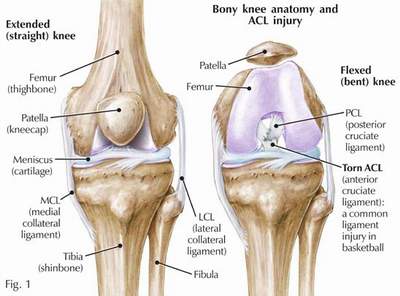
NEW YORK (Reuters Health) - Despite research suggesting womens knees are more prone to ligament injuries, a new Swedish study finds that men in that country have a greater number of anterior cruciate ligament (ACL) tears, and surgeries to fix them, than do Swedish women.

The report, published in the American Journal of Sports Medicine, is the first to count ACL injuries across the entire Swedish population - not just among players of particular sports, or in certain regions - which may help explain the findings, according to the authors.

"I think the difference is that earlier studies studied at-risk populations. In those studies, women are more prone to get injured. The difference with this study is that we studied the general population," said Dr. Richard Nordenvall, of Karolinska University Hospital in Stockholm.

The ACL is the key stabilizing ligament in the knee, and is most often injured during sports that involve quick turns or pivoting movements, like basketball, soccer and skiing. It has been estimated that 80,000 cruciate ligament injuries (the majority, ACL) occur in the U.S. every year, and almost half are surgically repaired.
ACL InjuriesData for Sweden was incomplete, so Nordenvall and his colleagues used a nationwide database of patients to see how many Swedes had knee ligament injuries and how many had surgical repairs between 2002 and 2009.

Overall, 56,659 people in Sweden tore a knee ligament during the study period. The researchers say that works out to an average of 78 tears for every 100,000 Swedish citizens.

Men accounted for about 34,000 of those tears, or 60 percent. Men also had 59 percent of the reconstructive surgeries associated with knee ligament injuries.

Swedish women tended to experience ACL injuries at a younger age (between ages 11 and 20, versus 21-30 for men).

When Nordenvall and his colleagues looked just at the age groups with the highest injury rates, men still had far more knee troubles. The numbers worked out to about 144 tears per 100,000 women between 11 and 20 years old, and 225 tears per 100,000 men aged 21-30.

Darin Padua, director of the Sports Medicine Research Laboratory at the University of North Carolina at Chapel Hill, said he was not surprised by the findings.

The evidence that women are more prone to ACL injuries is fairly specific to sports, not to the general population, explained Padua, who was not involved in the new research.

No one can say for certain why women seem to tear their knee ligaments earlier in life compared to men, Padua added, but he said it probably has to do with the bodys development and movement patterns.

What was uniform among both men and women in the Swedish study was the number who had surgery to reconstruct their ligaments. About 36 percent of men and women opted for reconstruction.

Those who chose surgery, however, tended to be younger - about 27 years old, on average - than those who didnt and whose average age was 35.

Padua said thats to be expected since not everyone needs their knee ligament repaired. He told Reuters Health that people who need surgery are the ones who will likely play sports - like basketball or tennis - in the future.

Typically, the cost of surgical repair on an ACL ranges between $6,000 and $8,000 in the Unites States.

For Nordenvall, the next step is to see what happens in those who have surgery.

"I am right now studying if reconstruction of the cruciate ligament prevents development of osteoarthritis," he told Reuters Health.

But he said its important for people to know how common the injury is.

"Its a common injury and its more common than what has been thought of earlier," he said.

Padua noted this study also helps to illustrate the point that both men and women should be taking part in injury prevention programs, many of which are accessible online, including one available for free on the University of North Carolinas Web site (http://bit.ly/PeLO29).

SOURCE: http://bit.ly/MXMvbC American Journal of Sports Medicine, online June 8, 2012.

Tuesday, October 1, 2013

0 Chocolate eaters More Slim

Chocolate eaters More Slim? | This is good news for chocolate fans. Recent research indicates that those who regularly eat chocolate have a more slender body than those who rarely eat them. Scientists from the University of California, San Diego, Beatrice Golomb, MD, PhD and his team found that adults who eat chocolate regularly tend to have a more slender body than not eating.

As published online in the Archives of Internal Medicine on March 26, 2012, the researchers emphasize that these findings do not prove that regular consumption of chocolate to lose weight. But there may be other factors that influence the differences in weight or perhaps it is merely a statistical fluke.

In his research, Golomb and colleagues involving nearly 1000 people volunteer. Participants were asked to fill out questionnaires about how often they eat chocolate. The average age of volunteers is 57 years old and 68 percent of them were male.

Researchers then tried to find an association between chocolate consumption and body mass index (BMI) of participants. BMI is a calculation based on height and weight are used to determine the weight, overweight and obesity in adults.

Body mass index average of 28 participants - that is, being overweight but not obese. On average, participants eating chocolate twice a week and regular physical activity (sports) three to four times a week.

The study results showed that those who eat regularly or frequently eat chocolate have a lower BMI than the other, even when researchers have linked with other factors such as age, gender, education and consumption of fruits and vegetables. In fact, the difference between participants who ate chocolate less frequently, and about 5 to 7 pounds.

Golomb said the chocolate including foods rich in antioxidants - substances that can fight the destructive agents in the body. Some research also has shown, the consumption of chocolate can provide positive health effects such as lowering cholesterol and keeping blood pressure. But on the other hand, chocolate can also be disastrous because of the high content of calories and fat.

Golomb again reminded that this study does not imply that consumption of chocolate can help you lose weight. The study also does not specify what kind of chocolate is best for your body. "This finding does not mean that you have to go out and eat 20 pounds of chocolate per day," said Golomb.

Friday, May 24, 2013

0 Pregnant No more Smoke for Baby Health

Pregnant women who stop smoking with the habit during pregnancy gave birth to healthy children, and with the same weight as those of mothers who do not smoke. This goes on from a study of Nick Macklon University of Southampton (UK) at the European Society of Human Reproduction and Embryology meeting in Stockholm (Sweden), indicating that the negative effects of smoking, the baby on the way, you can "Cancel" if you quit the habit during pregnancy.

Decreased birth weight is the most common effect of smoking during pregnancy, which in some cases. Risk of preterm birth and disorders related to the development of the brain Mothers who smoke, the researchers said, have always been encouraged to give up smoking again and became pregnant, although until now there was little evidence that the object could have positive effects on the unborn child in the last minute.

The result comes from a study of 50 000 pregnant women from the University Medical Centre in Southampton from 2002 to 2010 were followed, the researchers identified seven groups of women - Non smoking, who for more than a year to before conception closing, which was less than a year before conception, which was confirmed after the pregnancy stopped, further comprising up to 10 cigarettes a day, between 10 and 20 per day, more than 20 stops per day -. and are the data collected, the parameters of the newborn

After adjusting the results for other factors known that the properties of the baby at birth - gestational age, weight and age of the mother and the socio-economic class - the researchers found that children whose mothers had stopped smoking during the period " periconceptional "- or the time when they thought they were pregnant or as soon as pregnancy is confirmed - they were was born with a birth weight were significantly higher in children who smoke whose mothers continue, and similar to the offspring of women who never even smoked. "Not only was birth weight is much higher than among children of mothers who had to continue to smoke, was - explained Macklon - but we also have found that babies born the same gestational age and the same head circumference than those achieved by women had never smoked.
 

2012 i wanna free acne Health basic