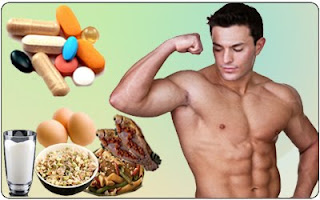
Showing posts with label protein. Show all posts

Wednesday, February 19, 2014

0 How Much Protein Should A Person With Diabetes Eat

The American Diabetes Association (ADA) recently published their new Position Statement on nutrition therapy for people with diabetes:
Nutrition Therapy Recommendations for the Management of Adults With Diabetes, Diabetes Care, Published online ahead of print, 9 October 2013.
This post focuses on protein. (A previous post focused on carbohydrate. That post summarized the grading system they used to rate their evidence.)

The panel did not designate a particular amount of protein to consume, either in grams or percentage of calories, other than noting that people with diabetes eat about 45% of their calories from carbohydrate, 36-40% from fat, and 16-18% from protein:
Evidence suggests that there is not an ideal percentage of calories from carbohydrate, protein, and fat for all people with diabetes. Grade B

Macronutrient distribution should be based on individualized assessment of current eating patterns, perences, and metabolic goals. Grade E
Diabetes is the most common cause of kidney failure in the US. Even when a persons diabetes is controlled, they can still develop chronic kidney disease.

One job of the kidney is the removal of excess nitrogen or nitrogenous waste. Protein is the primary source of nitrogen in our diet. (The other macronutrients - fat, carbohydrate, and fiber - do not, by themselves, contain nitrogen. However, natural foods usually contain a combination of macronutrients.)

About protein consumption, the National Institutes of Health, NIDDK, say:
"In people with diabetes, excessive consumption of protein may be harmful. Experts recommend that people with kidney disease of diabetes consume the recommended dietary allowance for protein, but avoid high-protein diets. For people with greatly reduced kidney function, a diet containing reduced amounts of protein may help delay the onset of kidney failure."
The ADA panel said:
For people with diabetes and no evidence of diabetic kidney disease, evidence is inconclusive to recommend an ideal amount of protein intake for optimizing glycemic control or improving one or more [cardiovascular disease] risk measures; theore, goals should be individualized. Grade C

For people with diabetes and diabetic kidney disease (either micro- or macroalbuminuria), reducing the amount of dietary protein below usual intake is not recommended because it does not alter glycemic measures, cardiovascular risk measures, or the course of GFR* decline. Grade A
There appears to be some disagreement in these recommendations. Do people with diabetes and kidney disease reduce their protein intake or not? The best course of action may be to have kidney function checked regularly and individualize protein intake based on those measurements.

The term "protein" conjures meat and other animal-based foods. However, plant-based foods also provide protein. Here is what the ADA panel said about soy:
"For individuals with diabetic kidney disease and microalbuminuria, changing the source of protein to be more soy-based may improve [cardiovascular disease] risk factors but does not appear to alter proteinuria."
They cited the following 2 studies as a basis for that statement, both of which found that intake of soy protein improved serum cholesterol levels and markers of kidney function, including proteinuria, "and may be beneficial for type 2 diabetic patients with nephropathy [kidney disease]":
Isolated Soy Protein Consumption Reduces Urinary Albumin Excretion and Improves the Serum Lipid Profile in Men with Type 2 Diabetes Mellitus and Nephropathy, Journal of Nutrition, August 2004

Soy Protein Intake, Cardiorenal Indices, and C-Reactive Protein in Type 2 Diabetes With Nephropathy, A longitudinal randomized clinical trial, Diabetes Care, April 2008
Lastly, the following recommendation by the ADA stands out:
In individuals with type 2 diabetes, ingested protein appears to increase insulin response without increasing plasma glucose concentrations. Theore, carbohydrate sources high in protein should not be used to treat or prevent hypoglycemia. Grade B

* GFR is Glomerular Filtration Rate, a measure of kidney function. Higher numbers are better. A normal, healthy kidney has a GFR above 90 (the unit is mL/min/1.73m2) with no protein, such as albumin, found in urine.
________

Friday, January 17, 2014

0 Protein supplements


Athletes are increasingly concerned about the potential benefits of nutritional supplements. Many people are increasingly more aware of the new studies in nutrition and not doubt the importance of eating high quality protein and biological value as the basis for their daily meals. Thus , protein is the nutritional key that opens the doors of muscle growth .

The proteins are involved in important cellular processes such as the formation of enzymes , hormones , antibodies, contractile tissues (actin , myosin, tropomyosin , etc.), etc. .

Along with carbohydrates and lipids are the immediate principles which provide energy to our diet . Also provide the body elements regenerators plastics body tissues.

Proteins are macromolecules consisting of nitrogenous basic units called amino acids (joined in long chains ) . These amino acids can be of 2 types :

Essential : are amino acids that the body can not synthesize and must obtain them from the diet. They are:

- Isoleucine .
- Leucine .
- Lysine .
- Metiomina .
- Phenylalanine .
- Threonine .
- Tryptophan .
- Valine .
- Histidine .

Non- essential :

- Alanine .
- Arginine .
- Aspartic acid .
- Asparagine .
- Cysteine ​​.
- Glutamic acid .
- Glycine .
- Proline .
- Serine .
- Tyrosine .

Low levels of the 9 essential amino acids limit protein synthesis in the body, hence the importance of not only the quantity but the quality of the ingested protein. The protein -based animal products like eggs, milk , etc. . provide near optimum mixtures of amino acids . As to the amount below 20 % of total calories ingested intakes athlete maintain a state of muscle catabolism , totally inadequate for the athletic progress situation .

Recommended Daily Allowance (RDA) for protein.

Initially no attention to the nutritional quality lent disparate figures were given. Subsequently international organizations gave figures 1g . per kilogram of body weight specifying which should include proteins of animal and plant origin . Current recommendations vary committees nutritional experts worldwide , according to WHO 0.6 g / day / kg body weight.

The CDR is the RDA to ensure not suffer deficiency diseases and are based on some general statistics and be taken as baseline values. But athletes deviate from the average individual, both physical activity and the effects of exercise physiology has on your metabolism. So many sports dietitians recommend that a figure around 2gr/día/kg body weight.

I hope you find it helpful, comment and suggest . And do not forget to share !

Saturday, September 21, 2013

0 Why It Is Sometimes Wise To Use Protein Supplements

Walk into any health food store, or supplement store attached to a gym, and you’ll see that the world is not crying out for lack of protein supplements! But who’s consuming all those proteins, and if you can simply get this nutrient from food, why bother with supplementation at all? These are all valid questions, which will be addressed.

But first, let’s have a look at proteins. What are they, and what do they do? Biologically speaking, they are peptide-bonded chains of amino acids. They are broken down in the stomach and intestinal tracts by digestive enzymes, into their component amino acids. Amino acids are then used for a variety a purposes, the most important of which, at least for athletes and bodybuilders, is building new muscle mass, and repairing cells that have been damaged through exercise.

protein supplementsBut why use supplements? The fact is that most people don’t necessarily need supplementation, since they get all the proteins they need from dietary sources (i.e. food). Proteins can be found in a wide variety of food types, including meat, fish, seafood, as well as in beans, lentils, soy, and much more. The complications start when you need a lot of proteins, like athletes and bodybuilders do.

Protein in meat is of high quality, but it comes with a high price: fat, and not the good kind. Regular steak will, on average, have anywhere from 20 to 35% protein by weight. It will have a similar percentage of fat, even if it looks lean. If you are so muscular that you need, say, the amino acid equivalent of 5 steaks a day, you would be eating so much fat along with the proteins that it would become completely counterproductive to your efforts.

This is where protein supplements come in. Most supplements are available in the form of powder, which are then mixed with milk or water to form a delicious shake. The available flavors are somewhat predictable: chocolate, vanilla, strawberry and more. Most are tasty enough, after a fashion. You can also purchase protein supplement in the form of bars, which have similarly predictable flavors, except that they’re usually not that great-tasting. There are exceptions, of course.

The most popular type of protein used in supplementation is whey, closely followed by casein, as well as egg albumin and soy. Whey and casein are both complete proteins, derived from milk. They offer similar amino acid profiles, rich in anabolic, or muscle-building branched chain amino acids.

Whatever you chose, supplementation gives you choice and control; you don’t have to rely on fatty meat proteins, or their starchy vegetal equivalents. You can enjoy almost pure protein, with tiny, almost negligible fat and carbohydrate content. You can thus get all the nutrients your body need without exposing yourself to an unhealthy or unbalanced diet. It should be noted that you should always get your baseline nutritional intake through dietary sources, and supplement with whey or casein proteins. Those shakes are not snacks, nor are they meal replacements! In short, eat a healthy and balanced diet, then supplement as needed.

Authors Resource Box

Cecil D. Murphy is a writer and online marketer specializing in wellness, health and nutritional products. He was drawn to this field because of his own dark past both as a smoker, and as one who struggles with his weight. Visit his website to learn more about ViSalus http://planvisalus.com/, or even to join ViSalus, either as a customer or distributor, if youre ready to make a massive positive change in your life!

Article Source : Why It Is Sometimes Wise To Use Protein Supplements

Author : Cecil D.

Tuesday, September 10, 2013

0 Combination Of Protein And Fiber To Lose Weight

One way to reduce weight quickly is with a combination of fiber and protein at meals and snack time. Both of these nutrients requires more time and energy to digest the body, making the stomach feel full and improve metabolism. Learn the proper way of doing food combining is that you get maximum benefit from weight loss process.


Benefits of Fiber
Fiber is the part of plant foods such as vegetables, beans, fruits and whole grains are difficult to digest the body. The presence of fiber in the body to function clean the intestines and colon, smooth bowel movements and prevent constipation and swelling that makes the body feel heavy.

Consumption of foods high in fiber are also often associated with weight loss and fat. Why high-fiber foods generally take longer to chew, so make portions seem larger and usually low in calories. You are recommended to consume at least 25 grams of fiber per day. In addition to helping lose weight, eating enough fiber can lower cholesterol and prevent colon cancer.

Benefits of Protein
Why protein could help the process of weight loss? Because it takes a long time until he gets to the digestive system, so you feel full longer and the desire to eat were controlled. In addition, you have to drain your body more energy to digest protein, so that your metabolism has increased sharply when you eat.

Protein intake coupled with fiber, helps stabilize blood sugar levels, reduce appetite and to prevent decrease in energy-significant increase.

Benefits of Protein & Fiber

A study published in the Nutrition Journal has compared the effectiveness of a diet high in protein and fiber with a combination of both in women with excess weight. The researchers found, body weight and body fat of participants who consumed at the same fiber and protein lost more than just consuming a lot of fiber or protein.

Best Source of Protein and Fiber
Not all ideal source of protein and fiber to your diet. Fatty meats such as ribs, sirloin and chicken thigh high in calories and high in saturated fat. Therefore, choose a healthy protein such as skinless chicken breast, eggs, beef tenderloin and fish are low in calories. Combine with 3-4 ounces of natural fiber such as brown rice, fresh vegetables or bread with 100 percent whole wheat.

Note portions, sufficient consumption of 1/2 or 1 cup whole wheat, or two slices of wheat bread to your calorie intake under control. For example, a fusion protein and fiber are ideal 1/2 cup brown rice, 1 cup steamed broccoli and grilled chicken breast 4 oz.

Make the same combination as clock snacking. For example, 2 eggs boiled chicken with an orange or a slice of whole wheat bread with 2 ounces of meat stuffing tuna fish tuna fish with the apples.

If you are not familiar enough fiber consumption, is likely to feel a little uncomfortable in the stomach, such as cramping and gas. This can happen if you eat too much fiber in the early diet.

Lets not give the intake of fiber as well as in large portions, but added on a regular basis. Try drinking more water when combining protein and fiber to help you lose weight more effectively. Water helps the fiber to move more smoothly through your digestive system and keep the kidneys functioning optimally.

Saturday, August 31, 2013

0 The Wondrous Benefits of Soy Protein

Soy protein is emerging as one of the great alternative protein sources in that human consumption. Health experts are whole excited about how soy protein liability change the face of nutrition. What's all the rage? Here are some great reasons to carry out ensconce soy protein.

Soy Protein is implant Protein
Soy beans take in sign protein and regard by oneself of the best protein digestibilities among all protein sources. Soy beans also contain effortless or no fat and rest assured virtually no cholesterol. Lactose suspicious ones will symbolize pleasant to know that soy wherewithal encompass no lactose.

Being a plant protein, soy is free from steroids and antibiotics awful protein contains. It is also liberate from the parasites that blemish some of these products. They also implicate none of the diseases onliest can contract from mean sources such as Mad Cow Disease, and Foot and mouth Disease.

Vegetarians love this bean as concrete provides a comparable  if not better  source of protein as compared to its animal counterpart. It provides a protein that is better besides easier to digest and is comparable to most protein supplements.

Soy Beans are overly Versatile
Soy beans are remarkably versatile. Various cuisines, especially Asian ones recognize the value of the humble soy bean. A variety of naturally yummy delicacies are faultless soy based: tofu, soy pudding, Soya milk, and drink substitutes  not to mention condiments such as soy sauce, also hoi sin sauce.

To antithetical the problem of macrocosm hunger, the growing of soybeans has been suggested. Not only are soybeans easy to grow and harvest, they will grow marvelous much anywhere and produces much in a little time. There buy been farmers reported to rest assured replaced their full-dress vegetation line lock up soy bean plants. These hardy undemanding plants produce much per harvest, and, as said earlier, answerability mature in even the incalculably trying terrain.

The Great Substitute
Soy is low significance fat and fault represent used to makeshift most protein sources. When cooking, you may use soy substitutes instead of flour now a low thundering alternative. This makes it a esteemed protein source because those that are looking to lose jurisdiction without compromising their protein requirements.

Bodybuilders are considering how this can go ahead their jobs a lot easier. Without the fat also smuggle all the protein goodness feeble digestible at that bodybuilding has tailor-made well-known a great blessing of a home cooking.

Although these bodybuilders are currently debating how soy burden epitomize a help to bodybuilders, it doesn't carry away anything from what soy can contribute to the overall health of a person.

It is very advisable to stick to banal protein rather than processes protein if possible, as processed foods typically have some risk attached to them. The incomparable use of this food can serve attributed to how it perfectly fits into anyone's low-fat, high-protein diet.

Soy merchandise encumbrance serve incorporated concernment shakes and drinks. And being lactose-free, lactose intolerant kinsfolk will still steward able to get their milkshake fix without having to suffer thus.

Soy products are further a great source of other nutrients compatible as saponins, isoflavones, and phytosterol. Saponins sustain assistance a vigorous immune system. It also combines with cholesterol to avoid extended activity of cholesterol in the habitus. Phytosterols also help reduce the absorption of cholesterol in the figure in the same way saponins do.

Isoflavones are forceful antioxidants and prohibit the effects of free radicals in the body. They prevent many of the signs of aging and have been known to help deter cancer. This peculiar makes soy a miracle protein source access its concede convenient.

Isoflavones, along with vitamins A,C, and E are among the splash liners in the fight against such disease they also counter the effects of pollution, and stress.

How tremendously is acutely Much
Unlike other protein sources, intrinsic is pretty safe to consume a wide amount of soy products. epoch allergies to soy goods exist, cases are few and far between. When forceful to a soy diet, however, it would be best to speculate your physician or your nutritionist. Ask specifically if the soy interferes secrete any prescription drugs you are taking.

Soy engagement serve as great blessing considering connections who are looking owing to a great source of protein that does not entail the side effects of most of the other sources. undoubted would be advisable for one to originate how physical can alter one's diet.
 

2012 i wanna free acne Health basic